


Scholar Highlights Forgotten Interpretative Heritage of Andalusia
IQNA – An Iranian university professor referred to the Moroccan scholar Abu al-Hasan Harrali as one of the unknown but influential Quran interpreters of Andalusia.
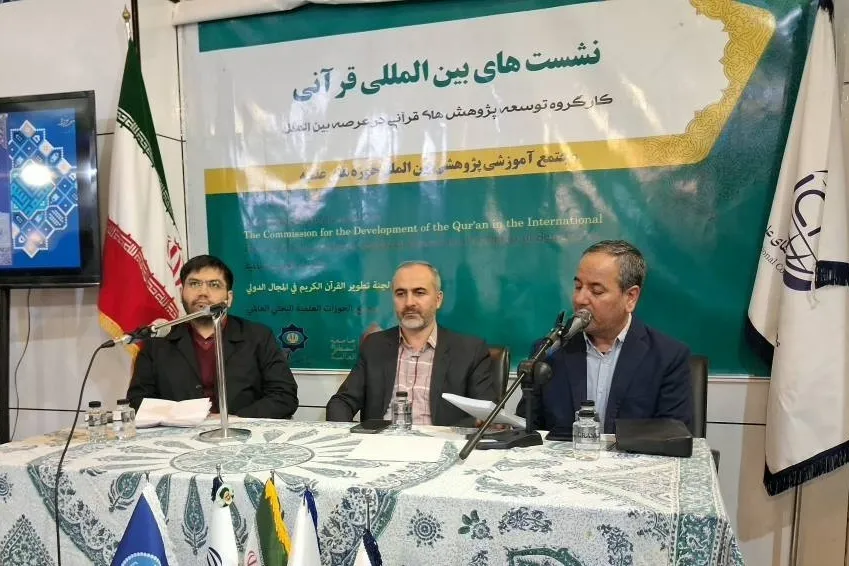
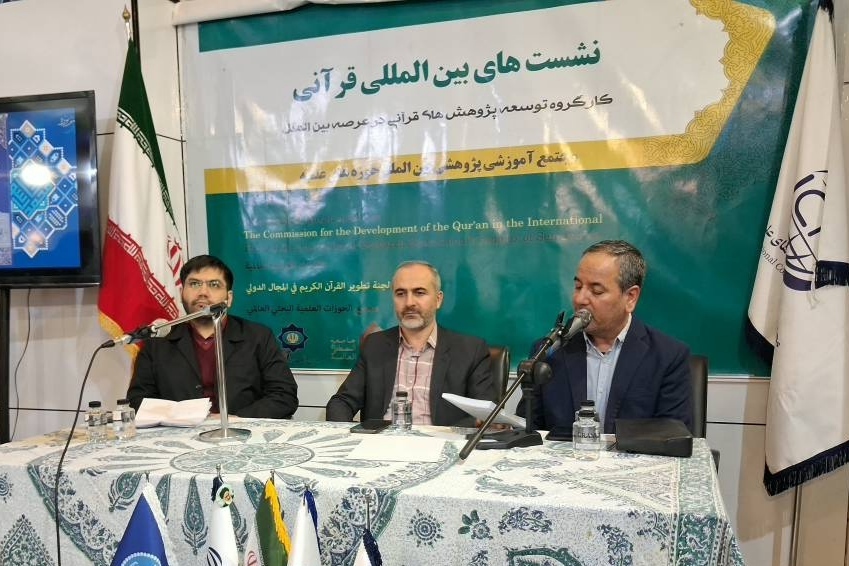
In addition to founding a school of interpretation in Spain, Harrali made numerous scientific journeys to the Islamic East, including Mecca and Medina, and trained students, Ruhollah Mohammad Alinejad, a professor at Allameh Tabatabai University and author of the book “From Andalusia to Hama”, said at a session held at the 33rd Tehran International Quran Exhibition on Tuesday.
At the session, he explained the lesser-known aspects of the interpretative heritage of Andalusia.
Referring to the seven hundred years of Islamic civilization in Andalusia, Mohammad Alinejad considered this region one of the important centers of thought production in the history of Islam and emphasized that in this geographical area, great thinkers emerged, part of whose Quranic heritage remains unknown to Iranian researchers.
According to him, the main motivation for writing this book was to familiarize the Iranian scientific community with the opinions and thoughts of Muslim Quran scholars in the distant lands of the Islamic world.
The university professor went on to introduce the scientific figure of Abu al-Hasan Harrali from Morocco and called him one of the unknown but influential commentators of Andalusia, who, in addition to founding a school of Quran interpretation in Spain, made numerous scientific journeys to the Islamic East, including Mecca and Medina, and also trained students.
According to him, some of this commentator’s interpretive points have survived and been revived in various sources, which can be very inspiring for students and professors in the field of Quranic studies.
He considered one of the notable points in the thought of Harrali to be the manifestations of devotion to Ahl-ul-Bayt (AS) within the context of the Maliki Sunni school of thought, and added, “Although the dominant trend in Andalusia during those seven hundred years was Sunni, clear signs of love and attention to the Commander of the Faithful (AS) can be seen in Harrali’s works.”
Read More:
He pointed to the naming of Harrali’s commentary as “The Key to the Closed Door” and said: “This title is derived from the prophetic hadith ‘I am the city of knowledge and Ali is its door,’ and Harrali states in the introduction to his commentary that understanding the Quran is meaningful in relation to the knowledge of Imam Ali (AS), a subject whose roots can also be traced in his interpretative views.”
He emphasized that rereading Andalusia’s exegetical legacy can open new horizons in Quranic research and shed more light on intellectual interactions that have been less widely discussed in the history of Quran interpretation.
4336668
